

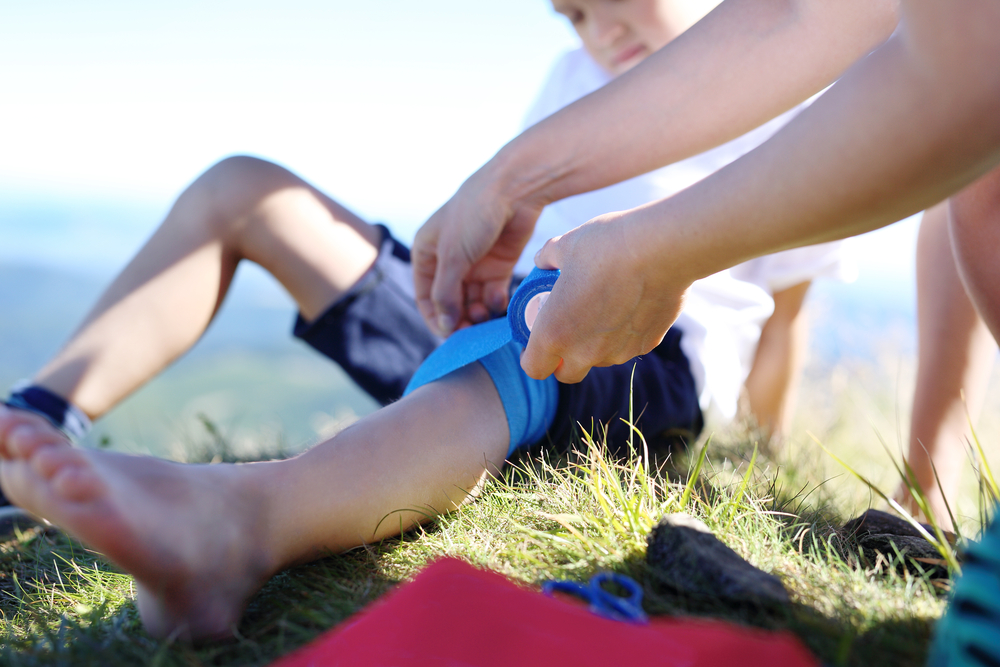
While running with friends in the forest, a boy accidentally cut his thigh muscle on a sharp branch. He was treated in a hospital and instructed to rest the limb and take care of the wound regularly. Two months later, a follow-up with the trauma surgeon showed everything was healing properly, bringing relief to everyone.
Unfortunately, he slipped again—this time on ice near his home—and tore the same muscle and skin in the exact spot. As he had been actively playing football since the age of six, he began to fear movement. His dream started to fade, leading to fear of repeated injuries, depressive states, and significant weight gain—because he minimized physical activity, but his diet remained like during regular training.


The trauma surgeon ordered strict bed rest with thigh immobilization, walking only with two crutches, and no training for the next six months.
His father contacted us asking for help and the use of all available rehabilitation and sports medicine methods to restore his son’s health and, if possible, enable a return to sports.
Using our knowledge from international football clubs, we applied all available healing techniques to promote wound healing and prevent complications that could impair the boy’s quality of life—such as muscle contractures, scar adhesions, and pain.
He underwent a sports rehabilitation program that included special procedures to prevent muscle loss, maintain proper proprioception (perception and control of the injured limb), and supportive medication for quality scar healing and pain/swelling reduction.
After six weeks, the scars had healed, and the muscles were ready for special sports rehab training. As a result, the patient recovered quickly and, based on tests, was handed over to his original football coach for gradually intensified training. Twelve weeks post-injury, he was fully participating in team practice.